
How to Choose the Best Private School in Las Vegas for Academic Excellence
Picking a school is arguably the most stressful decision a parent makes in Nevada. You look at test scores, talk to neighbors, and wonder if your child will actually be challenged or just coast through the day. Finding the best Private School Las Vegas isn’t just about the tuition cost or the fancy playground. It is about finding a place that treats your child’s brain like a garden that needs specific nutrients to bloom.
Data consistently shows that students who engage in high-level academic environments before age ten develop a sharper grasp of logic and problem-solving. But how do you filter through the polished brochures to find the reality? This blog breaks down what to look for, how to sniff out genuine academic rigor, and why the "best" school often comes down to specific structural details that most parents ignore during their first tour.
Look Beyond the Shiny Facilities
The biggest mistake parents make is focusing on the lobby or the athletic fields. Those things are nice, but they don’t teach algebra. Real academic excellence happens in the classroom dynamic. If you want a top-tier education, you need to ask about the student-to-teacher ratio and the actual pedagogical approach. Does the school emphasize rote memorization, or do they push for conceptual mastery?
Schools that prioritize excellence usually have a very clear, transparent methodology. They can tell you exactly what a student should know by the end of second grade. If a school representative gives vague answers about "character development" without linking it to academic milestones, keep walking. You need a place that tracks growth, not just attendance.
Assessing Curriculum Rigor and Bilingual Benefits

Education in the modern age requires a global mindset. Many parents in our city are now gravitating toward bilingual programs. Learning a second language, specifically in a STEM-heavy environment, forces the brain to build more neural pathways. It isn’t just about learning Chinese or Spanish; it’s about learning how to think in different structures.
When you compare options, look for a curriculum that integrates language with math and science. If the science lab is just a place to watch videos, it isn’t enough. True rigor looks like children analyzing data, building simple circuits, or solving logic puzzles that are actually difficult.
Key Indicators of an Academic Powerhouse:
The Three-Year Benchmark: Does the school have clear, non-negotiable academic goals for every three-year cycle of development?
Active Participation: Do students spend more time doing projects than listening to lectures?
Evidence of Mastery: Are students performing at or above the level of students in older grades elsewhere?
Supportive Atmosphere: Is there a clear path for students who need more help and a separate, faster path for those who are bored by the standard curriculum?
Why Small Class Sizes Matter More Than You Think
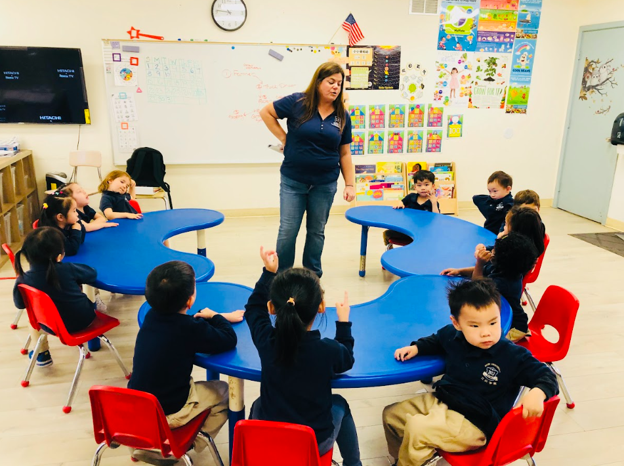
Public schools often deal with overcrowding, which means even the best teachers lose time to logistics. In a private setting, that dynamic should shift. Small classes allow a teacher to notice exactly when a child is stuck on a specific concept. If a school claims to have high academic standards but packs thirty kids into a room, the math doesn't work.
Excellence is granular. It’s the teacher who stops a lesson because they see a student’s face change when they don’t grasp a foundational idea. That kind of attention is the secret sauce of every Top Private School Las Vegas. It prevents gaps from forming early on. Once a gap forms in early math or reading, it gets much harder to close later.
Evaluating the School Culture
A school can have the perfect curriculum, but if the culture feels stiff or miserable, the learning won't stick. You want a place that balances rigorous expectations with a sense of wonder. Kids should be excited to show off what they learned, not just relieved that the day is over.
Observe the students during your tour. Do they look like they are in a holding pattern, or do they look engaged? Are they interacting with each other in ways that show respect and intellectual curiosity? This is the invisible layer of education that parents often overlook. A best school in Las Vegas will cultivate a community where academic ambition is the norm, not an outlier.
Red Flags to Watch During Your Tour:
Heavy Reliance on Screens: Avoid places where students spend the majority of the day on tablets.
Teacher Turnover: If the staff seems brand new, that is a warning sign of poor management.
Lack of Structure: If the halls are chaotic or the teachers seem frantic, the academic environment is likely suffering.
Focus on Awards over Effort: Schools that care more about bragging than actual progress might not be the right fit.
Conclusion
Take your time. This isn’t a decision to rush. Visit multiple campuses, ask the difficult questions about their teaching philosophy, and trust your gut. At the end of the day, you are looking for a partner in your child’s development. Noble Collegiate Academy provides that specialized, balanced approach for families who refuse to compromise on the quality of their child's intellectual journey.
Frequently Asked Questions
What defines a top private school in Las Vegas?
A top private school is defined by its ability to produce measurable academic growth, maintain small class sizes, and offer a rigorous curriculum that balances core subjects with critical thinking and language immersion.
How early should I start looking for the best private school in Las Vegas?
It is ideal to start your search at least 12 to 18 months before you intend to enroll. This gives you enough time to tour multiple campuses and evaluate their programs without feeling pressured.
Is tuition the best indicator of the best school in Las Vegas?
Higher tuition does not always correlate with better academic outcomes. Focus on student-teacher ratios, teacher experience, and the school’s historical track record regarding student mastery.
Why is a bilingual curriculum often considered better for academic excellence?
Bilingual education strengthens executive function and problem-solving skills in the brain. When combined with a STEM-focused curriculum, it prepares children for the complexities of a globalized, highly competitive future workforce.


Comments